The aim of this study was to extend an earlier retrospective
cohort study of schizophrenia via a 34-year prospective study, with an emphasis on describing the life-course of the illness.
Subjects were 128 first-ever admissions for schizophrenia in
1963 to either of two mental hospital in Alberta, Canada. Follow-up continued
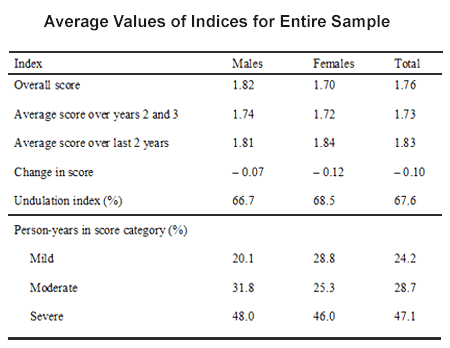
until death or 1997. A symptom severity scale, with scores ranging from 0 (no
symptoms) to 3 (hospitalized), was used to collect annual data on each subject.
An "Undulation Index" was constructed to reflect annual reversals in functioning.
Results were similar for men and women. The life-course
curves showed marked variability of symptom severity across subjects and over
time. The average score over the entire period of follow-up for the cohort
indicated 'moderate' symptoms, and the change in average score from beginning
to end of follow-up demonstrated a slight worsening of symptoms. The measures
of social functioning indicated that only about one quarter of the patients had
a good to excellent outcome.
The long-term course in schizophrenia varies in
symptom severity, and for many patients, there is a poor overall outcome.