| Self-Confidence, Mental Vulnerability, & Errors in Straight Lines | ||||||||
| |
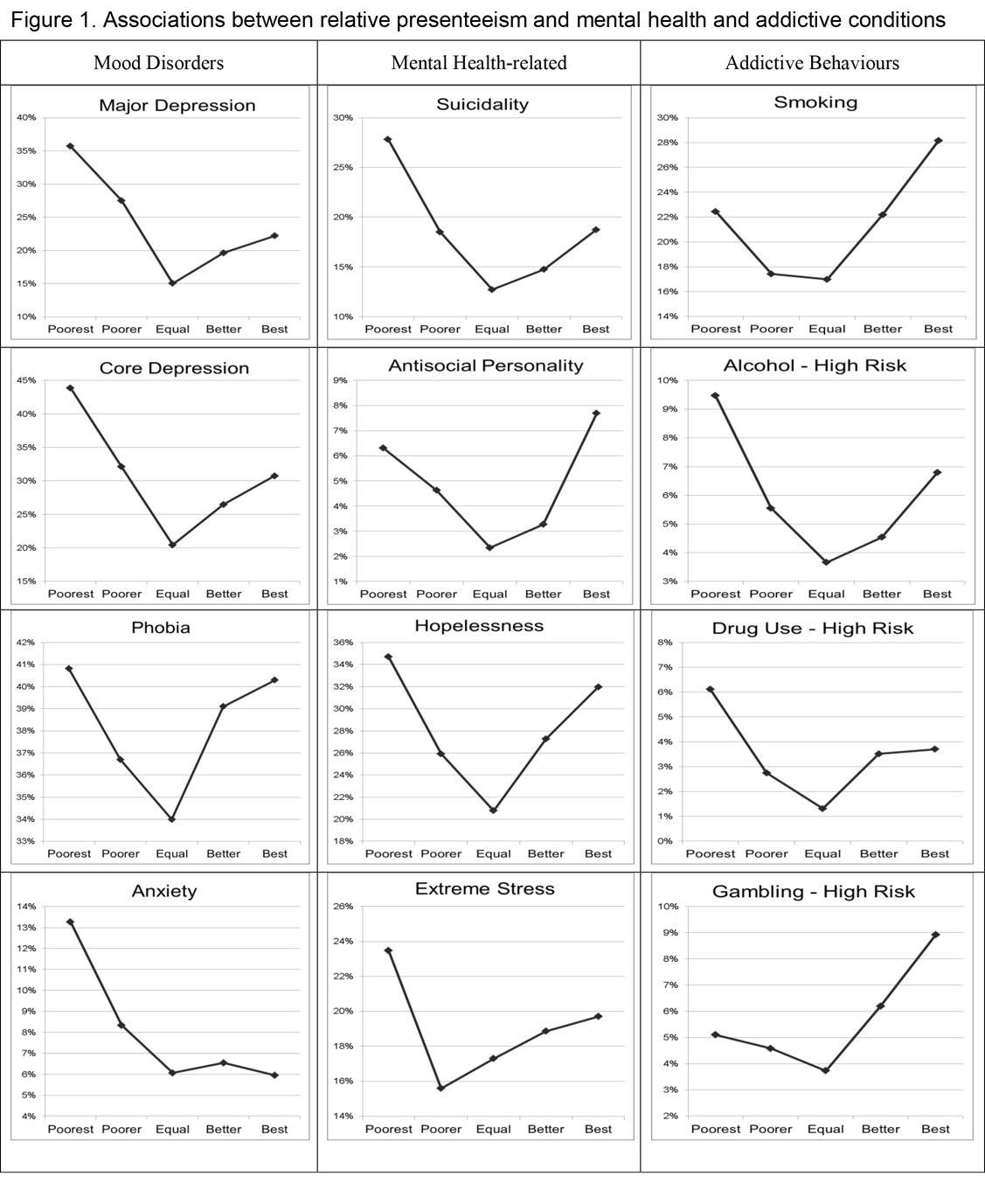 |
I recently
(2021) had a study published that shows that workers who rate
themselves to be less productive than other workers are more likely to
show mental vulnerability. For example, in the graph for Major
Depression , the group that rated themselves to be much poorer
producers (the "Poorest"), had the highest levels of major depression
at some time in their lives (over 35%). In comparison, those who deemed
themselves to be the equals of their co-workers did much better (about
15% depressed). Not surprising. However, those who thought that they
were better than others at work were not better in terms of mental
health (about 19% depressed -and about 22% for the "Best"). This
surprising "U-shaped graph" was repeated for 10 of the 11 other human
conditions shown here (anxiety not being so clear). In many cases, high
levels of confidence seemed even more troubling. So, if you if you
observe someone appearing to be unusually confident, have another look
(even if it is yourself).  |
||||||
|
Source:
Thompson AH (2021). Measures of mental health and addictions conditions
show a U-shaped relationship with self-rated worker performance. Social
Psychiatry and Psychiatric Epidemiology 56, 1823-1833.
https://doi.org/10.1007/s00127-020-01894-w. Click here for a copy.
|
||||||||
|
||||||||