| |
|
|
Background:
About one-third of the cost of mental illnesses is related
to productivity losses. Here we examine the
association of treated depression and work productivity.
Methods:
Our analyses used data from 2737 adults aged between 18 and 65 years
who
participated in a large-scale community survey of employed and recently
employed
people in Alberta. Using the WHO Health and Work Performance
Questionnaire, a productivity variable was created to capture high
productivity (above the 75th percentile). We used regression methods to
examine the
association of depression, their treatment and productivity,
controlling for demographic and job characteristics.
Results: About
8.5% experienced a depressive episode in the past year. The
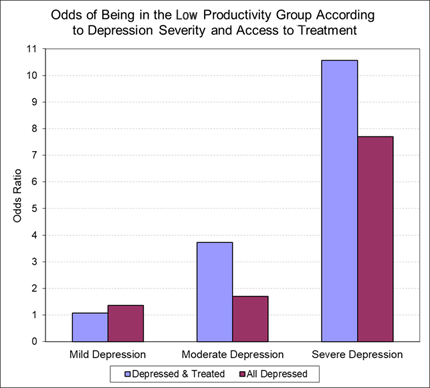
regression results indicated that depressed respondents
were significantly less likely to be highly productive - the greater
the severity the greater the productivity loss. However, this affect
was attenuated for those
who had received treatement. Unfortunately,about
one-half of workers with a moderate or severe depressive episode did not receive treatment.
Conclusions:
Our results corroborate those in the literature that indicate mental
disorders are
significantly associated with decreased work productivity and that more
comprehensive treatment services are needed.
|